
Last updated: October 2026 · Tatvika Naturals. For general information, not medical advice.
Black cohosh, red clover, chasteberry and wild yam are the four herbs women most often come across when researching menopause and PMS naturally. Each has a different history and a different evidence base. Here is a clear, side-by-side guide, including how they are used in creams versus supplements.
- Black cohosh: a North American root, the most studied herb for menopausal hot flushes (results are mixed).
- Red clover: a flower rich in isoflavones, plant compounds sometimes called phytoestrogens.
- Chasteberry (Vitex): a Mediterranean berry traditionally used for PMS and cycle comfort.
- Wild yam: a root containing diosgenin; the body cannot turn it into hormones.
- In creams, these herbs are used for a soothing self-care ritual; in supplements they act differently and need medical advice.
Comparison table
| Herb | Traditional use | What research suggests | Caution |
|---|---|---|---|
| Black cohosh (Actaea racemosa) | Menopause comfort | Some oral studies show modest benefit for hot flushes; others show none | Rare liver concerns with oral use; avoid with liver disease |
| Red clover (Trifolium pratense) | Women’s wellness, skin | Isoflavone studies show mixed, small effects | Avoid oral use with hormone-sensitive conditions or blood thinners |
| Chasteberry (Vitex agnus-castus) | PMS, cycle comfort | Oral extracts studied for PMS symptoms with some positive results | May interact with hormonal contraception and some medicines |
| Wild yam (Dioscorea villosa) | Cramps, women’s tonic | Little evidence; does not convert to progesterone | Ask a doctor in pregnancy or hormone therapy |

Creams vs supplements vs root powder
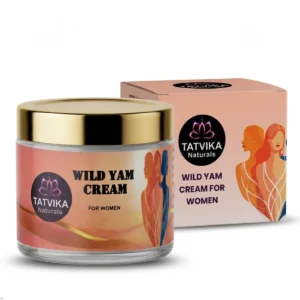
Supplements and powders (for example, wild yam root powder or black cohosh capsules) are taken by mouth and can interact with medicines, so they should be discussed with a doctor. Herbal body creams are cosmetics: they deliver these botanicals in a nourishing base for a gentle, calming massage and softer skin, without claiming to change hormone levels.

A gentle menopause self-care routine
- Evening massage: a herbal body cream on the abdomen and lower back as part of your wind-down.
- Cool, dark bedroom and a regular sleep time to ease night sweats.
- Strength training and walking for bone and mood health.
- Calcium, vitamin D and protein in your diet.
- Annual check-ups and an honest conversation with your gynaecologist about proven treatments if symptoms affect your life.

Menopause cream for women: what to expect
A good “menopause cream” from the cosmetic aisle will nourish drier skin and offer a calming routine. It will not replace medical treatment for severe hot flushes, bone loss or vaginal dryness, which have effective, doctor-prescribed options.
Frequently asked questions
Which herb is best for menopause?
Black cohosh is the most studied herb for hot flushes, though results are mixed. Speak to your doctor before taking any herbal supplement.
Are black cohosh and red clover safe together?
They are often combined in supplements, but both act differently and may not suit women with liver disease or hormone-sensitive conditions. Ask your doctor first. In a cosmetic body cream they are used topically.
What is chasteberry used for?
Chasteberry (Vitex) is traditionally used for PMS and cycle comfort, and oral extracts have been studied for PMS symptoms.
Is there a menopause cream that works?
Cosmetic herbal creams help with dryness and offer a calming ritual. For hot flushes and vaginal dryness, prescription treatments are the proven options.
Can I take wild yam root powder?
Oral wild yam has little evidence behind it. Speak to a doctor before using it, especially if pregnant or on hormones.